Short answer: the best windows for Arizona heat are dual-pane, hot-climate Low-E windows with a low SHGC in a heat-stable frame. Check the NFRC label: ENERGY STAR Version 7 criteria for the Southern climate zone (which includes the Phoenix metro) are SHGC ≤ 0.23 and U-factor ≤ 0.32 for windows.
The two numbers that matter
- SHGC (Solar Heat Gain Coefficient) — the share of the sun's heat that passes through the window. Lower is cooler. This is the headline number in Scottsdale.
- U-factor — how fast heat moves through the window overall. Lower is better. It matters more at higher elevations such as Desert Mountain, where winter nights are colder.
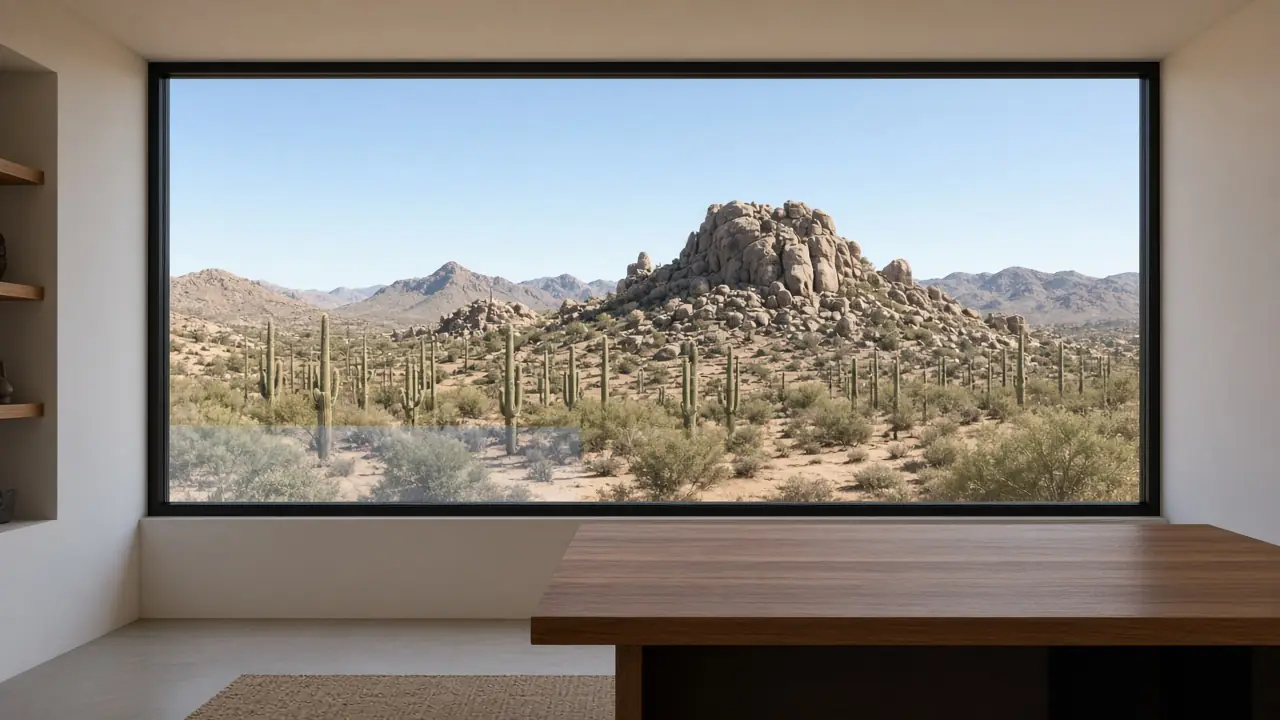
Also look at Visible Transmittance (VT): higher means brighter, clearer glass — important on view walls.
Low-E coatings
Low-E coatings are microscopically thin metallic layers that reflect infrared heat while letting visible light through. Coatings designed for hot climates prioritize low SHGC. The strongest solar-control coatings can look slightly tinted or reflective, so view samples outdoors, and check whether your HOA has rules about reflective glass.
Frame materials
- Vinyl: good insulator, wide price range; check that dark colors are rated for desert sun.
- Fiberglass: expands and contracts very little with temperature, a good match for extreme heat.
- Thermally broken aluminum: the thinnest frames for modern designs; the thermal break limits heat transfer through the frame.
- Wood/clad: beautiful, but exposed wood needs shade and upkeep.
Old non-thermally-broken aluminum frames — common in 1970s and 1980s homes in McCormick Ranch and around Old Town — conduct a lot of heat and are a big reason those homes feel hot near the windows.
Put the money where the sun is
West- and south-facing windows take the most heat. If you're phasing a project, start there. On shaded or north-facing view walls, a clearer coating with higher VT can make sense.
Other details that matter in the desert
- Seals and installation: a great window installed poorly will still leak heat and dust.
- Tempered or laminated glass where codes require it (in and near doors, wet areas, and other hazardous locations).
- Shade: overhangs, covered patios, and exterior screens reduce heat before it hits the glass.
Want help choosing glass for each side of your home? Fill out the short form below to get matched for a free estimate from a licensed local window pro.
Frequently asked questions
What are the best windows for Arizona heat?
The best windows for Arizona heat are dual-pane units with a hot-climate Low-E coating and a low Solar Heat Gain Coefficient (SHGC), in a frame that stays stable in high temperatures. ENERGY STAR Version 7 criteria for the Southern zone call for an SHGC of 0.23 or lower and a U-factor of 0.32 or lower.
Is SHGC or U-factor more important in Arizona?
In the Phoenix area, SHGC is usually the more important number because solar heat through the glass drives most summer heat gain; U-factor still matters, especially at higher elevations like Desert Mountain with colder winter nights.
Which window frame material is best in the desert?
Vinyl, fiberglass, and thermally broken aluminum can all perform well in the desert when they are quality products; fiberglass is very stable in heat, and dark-colored frames of any material should be rated for desert sun.
Do I need triple-pane windows in Arizona?
Usually not. In a hot climate the Low-E coating and SHGC have more impact than a third pane; triple-pane is mainly worth considering for noise or cold climates.