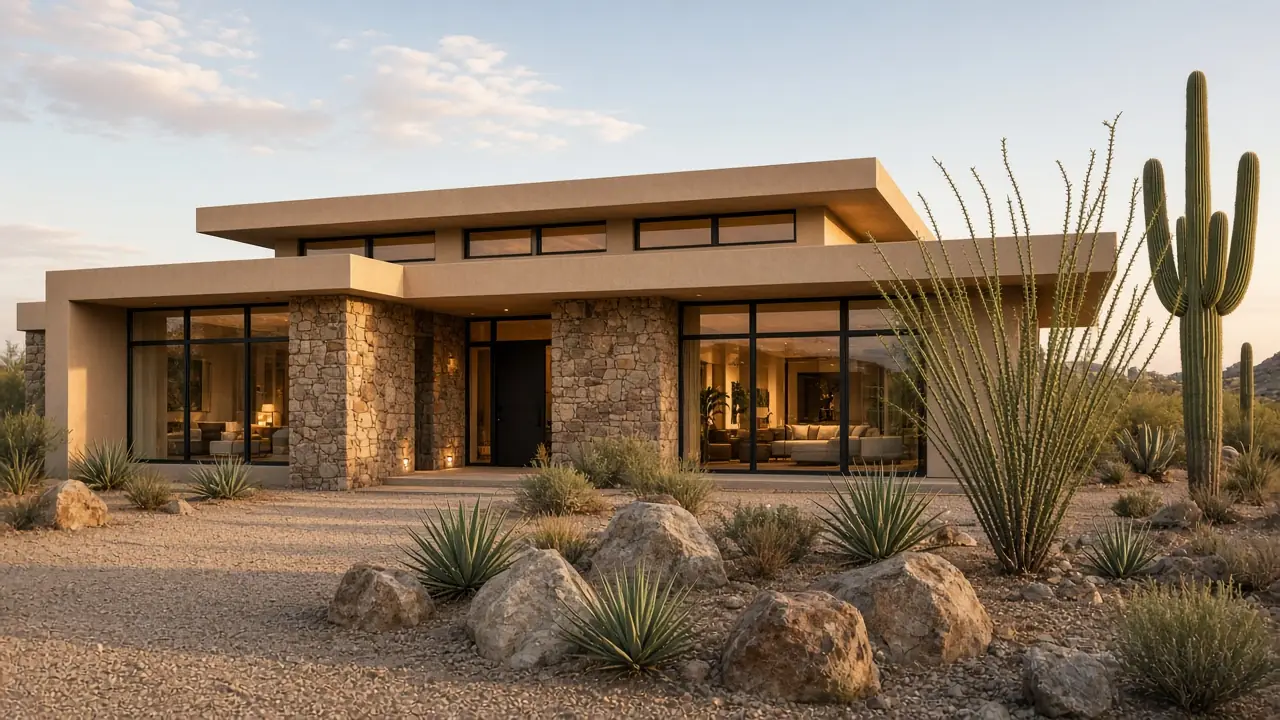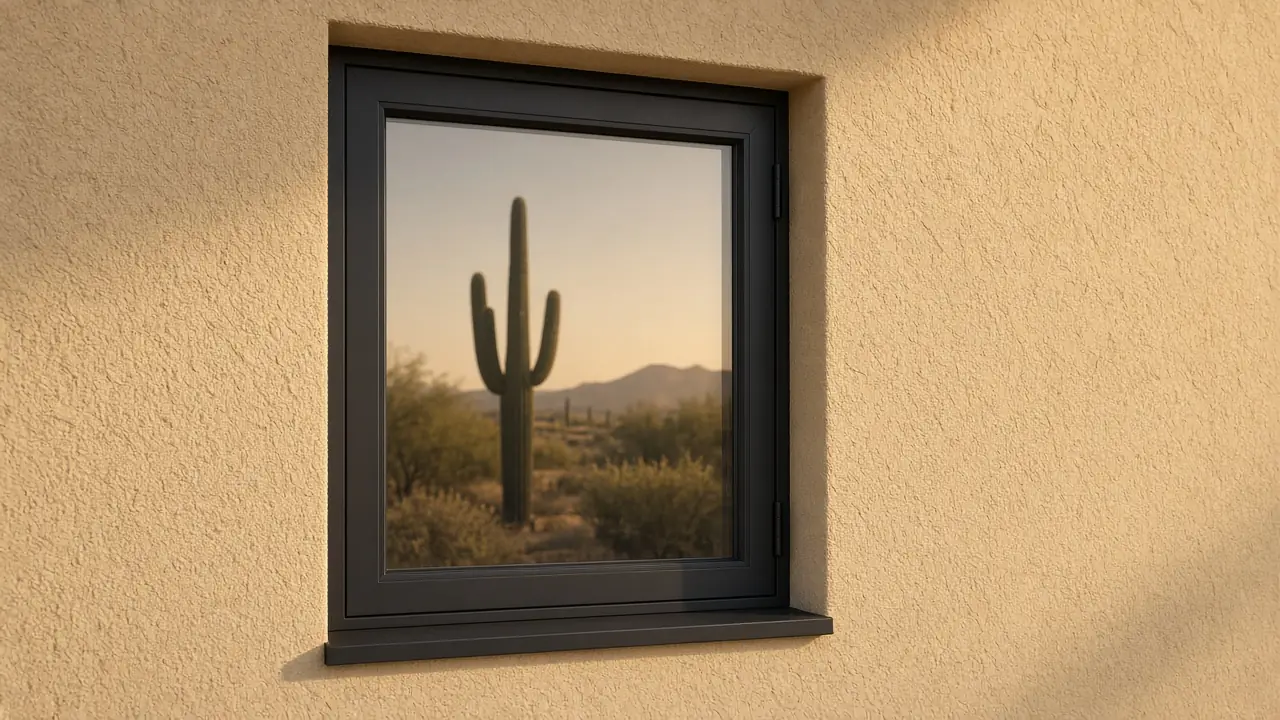
Single-pane, early dual-pane, and modern Low-E
Many Scottsdale homes built in the 1970s and early 1980s still have single-pane aluminum windows. Homes from the late 1980s through the 2000s often have dual-pane glass, but early builder-grade units may lack Low-E coatings, and seals can fail over time — the classic sign is fogging or haze between the panes.
Modern insulated glass units combine (2) panes, a sealed spacer, often an argon gas fill, and one or more Low-E coatings tuned for hot climates.
Reading the NFRC label
- SHGC (Solar Heat Gain Coefficient): fraction of solar heat that gets through. Lower = cooler rooms. This is the key number in the desert.
- U-factor: rate of heat transfer through the whole window. Lower = better insulation.
- VT (Visible Transmittance): how much daylight comes through. Higher = brighter, clearer views.
- Air leakage: lower is tighter.
Check the ENERGY STAR climate map for your ZIP code; the Phoenix metro falls in the Southern zone, where Version 7 criteria for windows are an SHGC of 0.23 or lower and a U-factor of 0.32 or lower.
Balancing heat control and views
Strong solar-control coatings can slightly tint or darken glass. On a view wall facing the McDowell Mountains, Camelback, or Pinnacle Peak, you may prefer a coating with higher visible transmittance and handle heat with overhangs or shades. On a west wall with no view, maximum heat rejection usually wins. A good dealer will suggest different glass packages for different elevations of the house.